A Drawer Reset for Things Everyone Uses
A drawer reset for things everyone uses gives shared tools clear homes, keeps frequent-use items easy to reach, and makes clutter easier to catch.
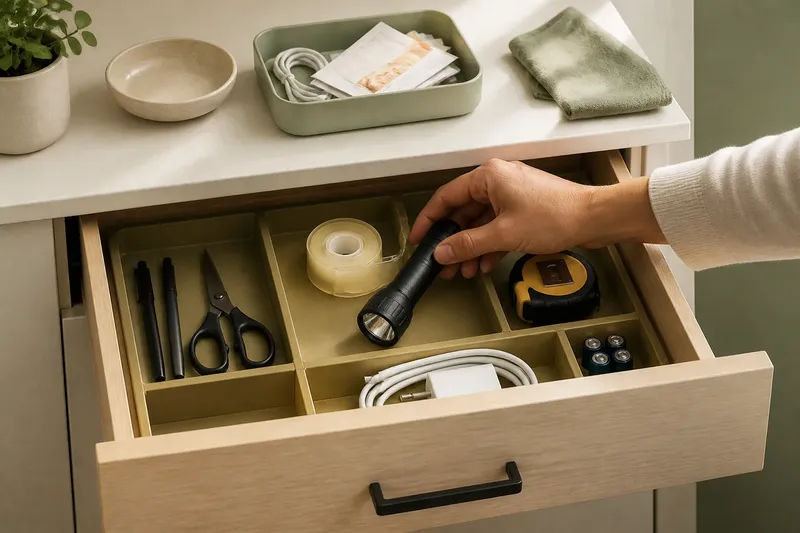
The common mistake with a shared drawer is treating every object as equally useful and leaving all of it within easy reach. A drawer reset for things everyone uses starts by sorting for frequency, so daily essentials stop getting buried and rarely used odds and ends stop taking over the space.
Choose one drawer people already open for a practical reason: the kitchen drawer with scissors and tape, the entry drawer with keys and a flashlight, or a desk drawer with pens and chargers. Don’t empty several drawers at once. A small, bounded job is easier to finish and gives everyone a clear place to weigh in.
Agree on the drawer’s job before you empty it
Ask the people who use the drawer what they expect to find there. Keep the answer plain and narrow, such as “tools for quick kitchen fixes” or “things we need before leaving home.” If the drawer has no shared purpose, decide one together before sorting. Otherwise, the same object can seem essential to one person and like clutter to another.
Set out a tray or clear patch of counter for sorting, plus a cloth for wiping the drawer. If it has a removable organizer, take it out. Leave anyone else’s belongings untouched until that person can say what they want done with them; a shared reset is not permission to discard personal property.
Sort by how often each item is used
Take everything out and make three working groups: used often, used sometimes, and rarely or never used here. Think about ordinary routines rather than imagined emergencies. A screwdriver used for small fixes may belong in the drawer; a specialty tool brought out for an occasional project may fit better with the household tools.
Check each item as you sort. Does it work? Is it complete? Does it belong to the drawer’s agreed job? Put duplicates side by side, and ask whether keeping more than one helps several people use the drawer at once. A spare pen can be handy; a handful of dried-out pens only makes the working ones harder to spot.
Say you’re resetting the entry drawer and find a flashlight, two pens, a tape measure, old takeout menus, and a charging cable no one recognizes. Imagine the household has agreed that the drawer is for things needed on the way out or for quick fixes. Check the flashlight and pens; if they work, put them near the front, but if a pen is dry, move it out for disposal. The tape measure goes with the tools, the menus leave the drawer, and the cable waits in a small “ask” container until someone identifies it. The visible result is a drawer with useful items easy to distinguish and uncertain property kept out of the way.
Give each keeper a visible home
Put the most frequently used items where a hand naturally reaches first. Use a shallow tray, a small cup, or an adjustable drawer divider to keep categories from sliding together. Keep similar things together: pens with pens, batteries with the flashlight if that arrangement suits the household, and small fastening supplies in a container that opens easily.
Choose homes that make sense without a map. A label can help when categories are easy to confuse, but labels need not cover every corner. A simple strip marked “tape” is useful if several rolls look alike; an elaborate labeling project is not worth the effort when people can see and recognize the contents at a glance.
Leave some open space. A drawer packed edge to edge has no room for a returned item, so people tend to drop things wherever they fit. Empty space is useful only if it serves the drawer’s job; it is not an invitation to add unrelated objects.
Decide what does not belong in the drawer
Move items that clearly belong elsewhere to their proper homes: personal belongings to their owners, tools to a toolbox, and papers to the place where the household handles paperwork. For uncertain items, create one temporary “ask” container outside the drawer and agree who will check it and when. Keep that holding spot small, so it does not become a second junk drawer.
Agree on a simple boundary: new items go in only if they fit the drawer’s purpose and have a home. If someone wants to add a new shared item, they can first say what it is for and where it will sit. That keeps the drawer from becoming the default destination for anything nobody wants to put away.
Use this shared drawer check before putting items back
For each item, check its condition, purpose, and home. Use the observations below to make a clear decision instead of keeping something simply because it was already in the drawer.
- Check whether an item works; if it works and fits the agreed purpose, keep it, but if it is broken, move it out for repair or disposal as appropriate.
- Check whether the item is used often; if it is, place it near the front, but if it is rarely used, move it to suitable household storage unless the group has a specific reason to keep it here.
- Check whether the item is complete; if it is complete and useful, keep it, but if parts are missing, set it aside for the owner to decide or move it out if no one claims it.
- Check whether a duplicate helps more than one person use the drawer; if it does, keep the useful duplicates together, but if it does not, move the extras to their proper storage.
- Check whether the item belongs to someone personally; if it does, ask that person before changing its location, but if it is shared, sort it by the drawer’s agreed purpose.
- Check whether everyone can see where the item belongs; if they can, return it there, but if they cannot, add a small tray or a short label for that category.
- Check whether the drawer closes and its contents remain easy to scan; if so, keep the layout, but if it feels crowded, move out the least-used items or adjust the organizer.
Answer the questions people ask about shared drawers?
What belongs in a shared household drawer?
Keep items that serve the drawer’s agreed purpose and that more than one person may reasonably need. Personal items, broken objects, and supplies with a better home elsewhere should not stay just because they were already there.
Should rarely used items stay in the drawer?
Usually, move them to a familiar storage place unless people need them together in that drawer for a specific reason. Base the choice on actual household routines, not a vague possibility that an item might someday be useful.
How can everyone find things without labels?
Group similar objects in visible trays or dividers and keep frequently used items at the front. If people still confuse two categories, add a short label to the relevant container rather than labeling every object.
What should happen when the drawer fills up again?
Use the agreed purpose as the filter: move out what no longer fits before adding another item. A brief shared check when the drawer becomes hard to open or scan can catch the buildup without turning upkeep into a large project.
Make returning things part of the agreement
Before putting the drawer back, invite everyone who uses it to look at the layout and suggest one sensible adjustment. Then agree that items return to their visible homes after use. This is easier to follow when the homes are obvious and the drawer is not crowded, and it avoids making one person the permanent keeper of everyone else’s belongings.
For items whose placement or handling depends on a product label, manufacturer instructions, or local rules, follow those directions rather than improvising a storage arrangement.
Keep the first reset modest. If the drawer starts collecting stray objects again, remove only what no longer fits its purpose and restore the agreed homes. A drawer reset for things everyone uses works best when people can see the rule in the layout itself—and when there is a clear place for the next item that truly belongs.