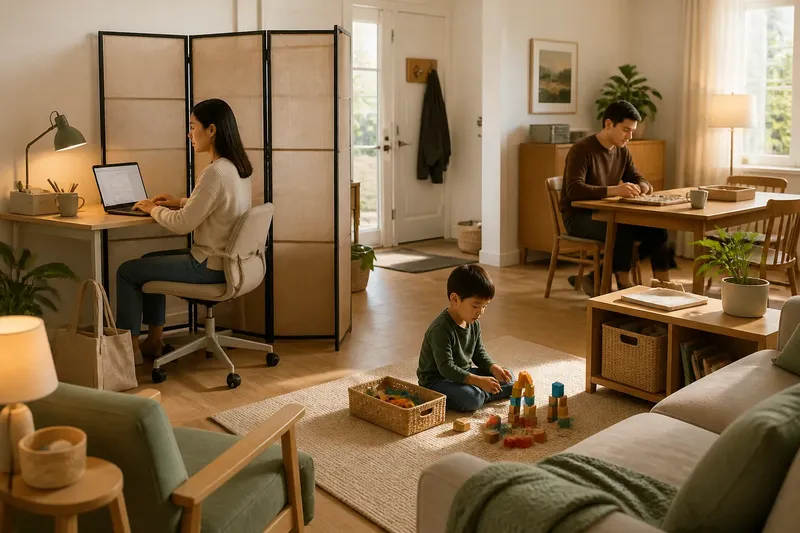
How Paper Planners Helped Households Keep Time Together
Paper planners gave households a visible place to keep dates, routines, and reminders together. Learn how these ordinary records made shared time easier to follow.
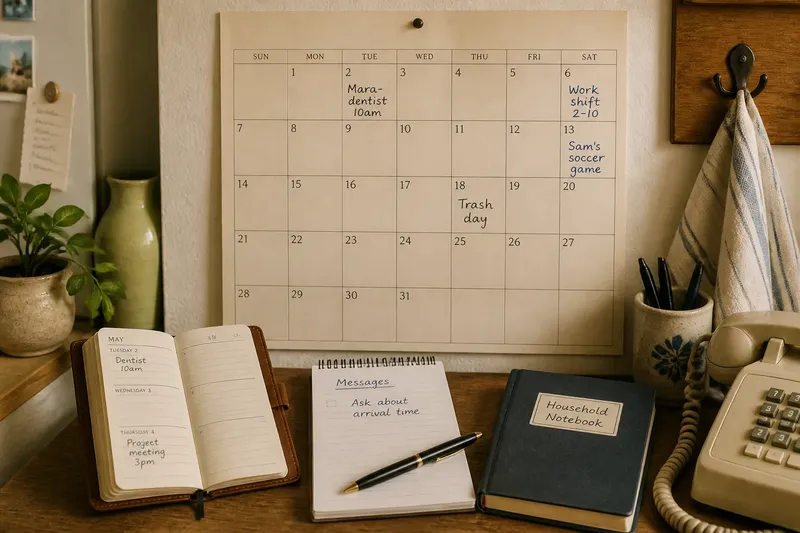
The common mistake in accounts of household timekeeping is treating old paper planners as clumsy versions of calendar apps. That misses what they were built to do: keep recurring routines and dates in view where people already gathered. A paper planner could spare a household from repeated questions, but only if everyone knew where to look.
Before shared digital calendars, families and groups used wall calendars, desk diaries, pocket planners, and notes near a telephone or kitchen table. These objects were not one uniform system. Their placement and format shaped how people remembered appointments, tracked routines, and noticed what was coming next.
Wall calendars made household time visible
A wall calendar turned dates into a feature of a shared room. Hung near a kitchen doorway or telephone, it could show birthdays, visits, school events, and appointments at a glance. Anyone passing by might notice that an evening was already occupied.
That visibility depended on ordinary habits. A calendar tucked in a drawer could not prompt anyone who forgot to open it. A calendar in a busy place could attract attention, but crowded handwriting or unexplained abbreviations might leave readers guessing.
Imagine a household with a wall calendar beside the refrigerator. One person writes “Mara—dentist” on Tuesday, while another adds a work shift in the same square. The visible entries help everyone see that the day is busy; adding a time or a clear name would help them distinguish the two commitments.
Pocket planners traveled with the person who kept them
A pocket planner served a different purpose. It traveled to work, school, or appointments, allowing its owner to consult dates away from home. Some people used a pocket diary for personal commitments and transferred only the household-relevant details to a wall calendar or note.
This division could be useful, but it also created a handoff. If a visitor’s arrival time lived only in one person’s planner, the rest of the household might not know when to be home. The practical question was not whether every detail belonged in a shared place, but which details other people needed to act on.
A desk diary offered another middle ground: private enough for one person’s notes, yet often left in a predictable spot at home or work. Its usefulness came from the keeper’s routine. Without a habit of checking or sharing relevant entries, it remained a personal record rather than a household one.
Routine marks helped people remember repeated tasks
Paper records were also suited to rhythms that returned: market days, a weekly visit, trash collection, or a regular club meeting. A recurring mark could show the pattern without requiring a fresh conversation each time. Families sometimes paired a calendar with a household notebook for details that did not fit neatly in a date square.
Not every routine needed a written record. A repeated task that everyone already understood might be easier to remember through habit. Paper helped most when timing varied, when someone new needed to learn the routine, or when people had different schedules.
It was not worth building a complicated color code or key for a few ordinary events. If the marks required a separate explanation, plain words were usually easier to read. A simple calendar that people actually checked was more useful than an elaborate one that stayed untouched.
Paper planners carried different kinds of information?
What belonged on a wall calendar?
Dates that affected several people fit well on a shared wall calendar: a planned visit, a school event, or a day when someone needed the car. Keep the wording legible and add enough context for another household member to understand the entry.
What was better kept in a pocket planner?
Personal appointments and details that only the owner needed could stay in a pocket planner. If another person needed to prepare, provide transport, or be home, share the relevant date and detail through a household record or direct conversation.
How could someone correct a paper entry?
Cross out an outdated entry so it no longer reads as current, then write the revised information clearly. If the change affects someone who may not see the page, tell that person directly rather than relying on the correction alone.
Did every household need a dedicated planner?
No. A household with few shared commitments might manage with a small calendar or a note by the phone. The right format was the one people could find, read, and maintain without turning routine planning into extra work.
A household could combine paper tools without making a system of them
Say a household has a kitchen wall calendar, one person’s pocket planner, and a telephone message pad. The starting point is that a relative plans to visit on Saturday, the arrival time is not yet known, and one household member needs to arrange to be home. First, that member writes “Relative visiting Saturday—time pending” on the wall calendar. Next, the person expecting the call notes “Ask about arrival time” on the message pad. When the relative confirms an evening arrival, the household updates the calendar and tells the person who needs to be home. The resulting arrangement is visible where the household checks dates, while the follow-up note has served its purpose and can be crossed off.
The same approach works for a paper planner, a notebook, or a calendar pinned near the telephone: use each for the job it can do well, and avoid copying every detail everywhere. A clear shared entry can keep a household’s time in view without pretending that one page can replace every conversation.
Paper planners helped people keep time together through placement, handwriting, and repeated attention. If you are choosing a paper planner for shared household time now, start with the spot people already pass and the dates they genuinely need to see. That small choice matters more than a complicated layout.